Crossbonding: The Key to Efficient Cable Networks in Renewable Energy Projects
The challenge: sheath losses due to circulating currents
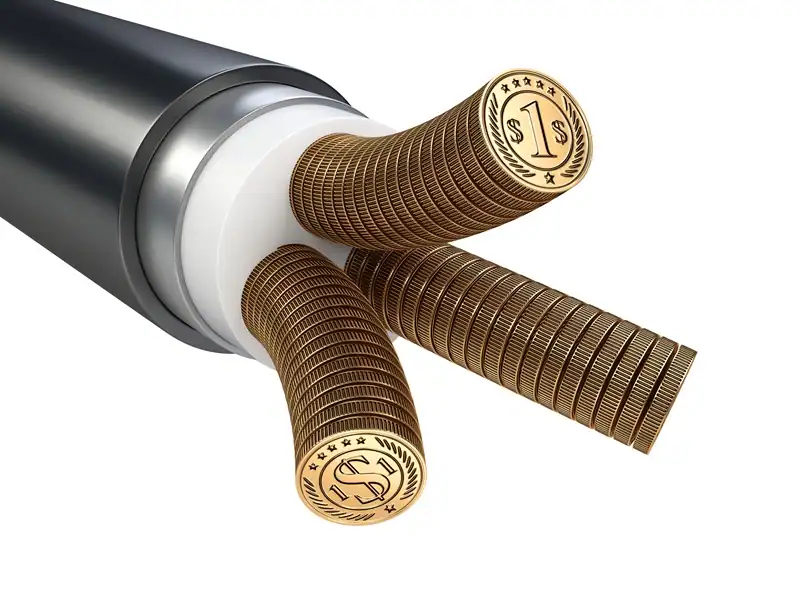
Sheath losses are electrical losses that occur in the metal sheath screen of a cable, due to currents circulating there. These currents are induced by electromagnetic coupling with the phase conductors. These currents cause additional heat and sheath losses, reducing the thermal capacity (ampacity). For large solar and wind farms, with high currents and long cable runs, this is a serious technical and economic challenge.
What is the cause of mantle losses?
- Inductive coupling: the magnetic field of the nuclear current induces current in the earth screen.
- Capacitive effects: voltage between core and screen causes small displacement currents.
- Eddy currents in metal screens.
- Odd stress distribution or asymmetry in multi-stage systems.
The solution: cross-bonding cable sets
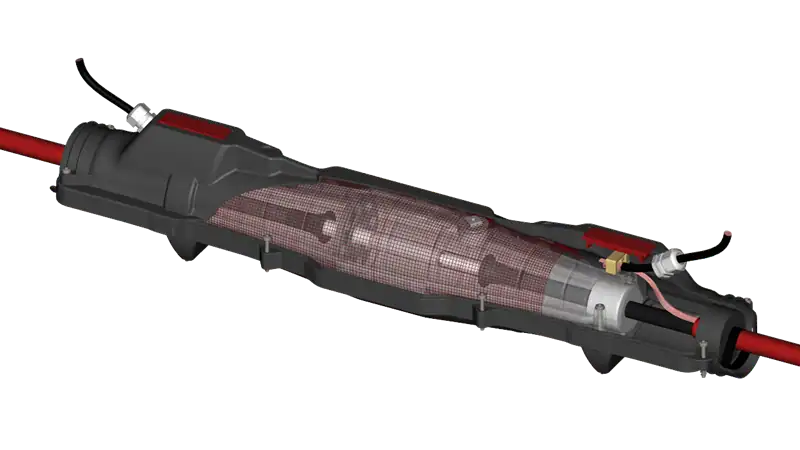
Cross-bonding is a smart grounding technique that eliminates circulating currents by interrupting the mantles of the three phases at strategic points and connecting them crosswise. This ensures:
- No large induction current → less sheath losses.
- Maximum ampacity → full utilization of cable capacity and minimum heat generation.
Want to know more about reliable cable connections?
Would you like to discover how LoviSil® Crossbonding joints protect your medium-voltage network against failures and save costs? Feel free to contact our specialists for advice without obligation.