Smarter MV networks for renewable energy: LoviSil® cross-bonding joints
Renewable energy projects are growing rapidly. Wind farms and solar parks are increasing in size and underground, cable routes are getting longer. Consequently, Medium Voltage networks are operating under higher, more continuous loads using power cables with cross-sections typically above 630 mm2. While this supports the energy transition, it places new demands on the reliability of underground cable systems.
One of the key challenges is less visible, but highly relevant: induced currents in cable screens.
From High-voltage to Medium-voltage necessity
Historically, cross-bonding has been a standard technology for high-voltage (HV) systems (above 72.5 kV), while MV cables were traditionally solidly grounded. This worked when MV networks used smaller cables (up to 240mm2) and loaded at only 50% capacity. However, modern renewable grids operate closer to 100% capacity for long periods. This evolution makes MV networks more similar to HV systems, requiring the same advanced grounding strategies to maintain efficiency.
Long cable routes create new challenges
In renewable MV networks, long cable lengths and high load currents induce circulating currents in the metallic cable screen. In traditional solidly grounded systems (where screens are connected to ground at both ends) field measurements on cables have shown induced currents as high as 70A.
These currents may lead to several critical issues:
- High energy losses: continuous circulation significantly reduces overall system efficiency.
- Thermal overheating: excessive heat can lead to the thermal aging of insulation and a significant reduction in system lifetime.
- Component damage: hot screen wires and thermo-dynamic cycles can damage joints and terminations which may cause failures.
To maintain reliable and efficient networks, these effects must be properly controlled.
Cross-bonding: a proven approach
Cross-bonding is a proven method to manage induced screen currents by “crossing” the cable screens at joint positions along the cable route. By dividing the cable route into equal sections and transposing (crossing) the screens, the induced voltages effectively cancel each other out. By balancing electrical forces in the system, overheating is reduced, and losses are minimised.
Practical experience shows that a system measuring 50A on the screen can see that current drop to just 5A after introducing cross-bonding. This improves thermal behaviour and overall network performance without requiring larger, more expensive cable diameters.
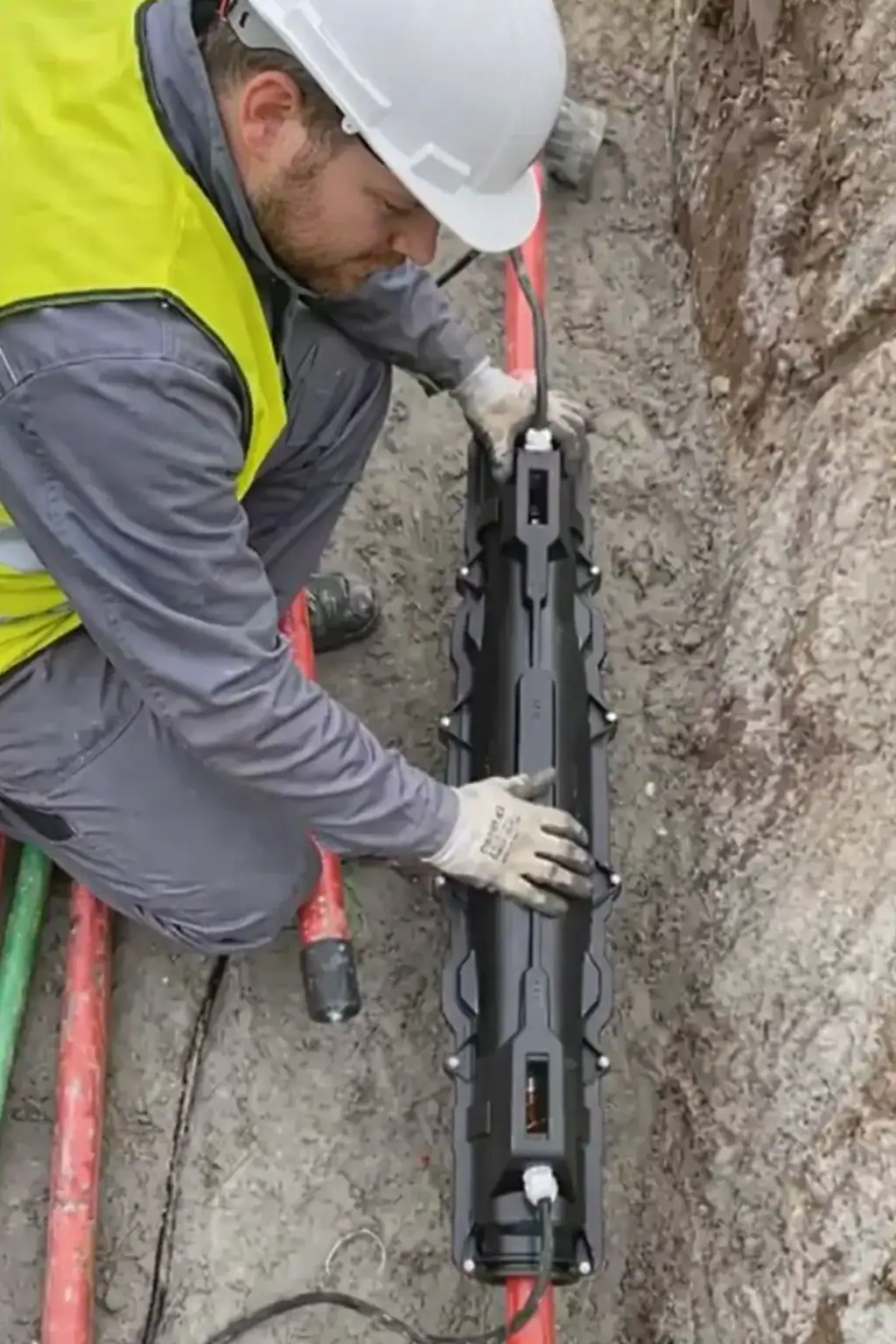
Lovink Enertech applies this principle in the LoviSil® cross-bonding joint, developed specifically for renewable energy applications.
LoviSil® cross-bonding joint: designed for renewable MV networks
Lovink Enertech applies these principles in the LoviSil® cross-bonding joint. These joint features a build-in insulated screen interruption required to separate and cross the screen connections. Key benefits include:
- Reduced induced screen currents
Effectively minimizes losses and prevents overheating in high-load MV routes. - Extended cable lifetime
Lower thermal stress helps preserve insulation quality over time. - Moisture protection
Utilizing protolin (resin) mechanical protection, which prevents moisture ingress - Efficient network design
Optimal performance without increasing cable diameters or material costs.
The joint is based on LoviSil® liquid silicone insulation, combined with a mechanically strong outer shell. This ensures reliable performance even under high loads and in complex network conditions.
From generation to grid: reliability where it matters
As MV networks evolve to handle loads close to 100% for long periods, they increasingly require the design precision of High-Voltage systems. By reducing losses and improving thermal performance, LoviSil® cross-bonding joints help safeguard network reliability where it matters most: underground.
Lovink joints are tested and certified according to international standards, ensuring proven reliability and long-term performance in medium-voltage networks.
Supporting future-ready MV networks
As renewable energy continues to grow, MV networks needs to evolve alongside it. The LoviSil® cross-bonding joint supports this transition by offering a smart, proven solution for long cable routes and high-load applications.
Interested in how cross-bonding can improve your renewable MV project?
Explore our solutions or contact our specialists.