History of cable joints and LoviSil® technology
Today, it is a matter of course that electricity is transported to households and businesses via cables. But how did this come about and when did the first cable joints appear? This article is the first part of a series on the occasion of the 100th anniversary of Lovink Enertech, which began in 1919 with the production of cable joints.
Start of electrification
At the end of the 19th century, only a few power plants in the Netherlands operated a network with a range of several hundred meters. Municipal authorities blocked the development because they feared competition for their gas companies, which then provided the lighting. In the early 1900s, most major Dutch cities established municipal power plants, thanks to the rise of alternating current and improved economic conditions. On the eve of the First World War, the Netherlands already had 83 power stations.
The first cable joints
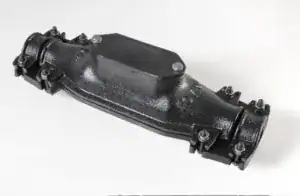
In 1919, Lovink produced the first cable joints made of cast iron, filled with bitumen. These were applied to paper lead cables, which contained paper insulation soaked in oil and resin, protected by a lead sheath from groundwater. Later, metallized paper was added for extra insulation.
Introduction of polymeric cables
In the sixties, plastic made its appearance. In 1975, Lovink introduced a new generation of low-voltage cable joints, still with cast iron housing, but filled with synthetic resin. Plastic cables became popular because of their increased transport capacity, easier installation, and lower costs. From the seventies, plastic became the standard.
Development of jointing technologies
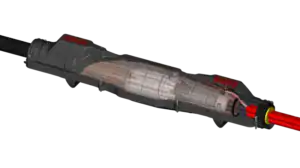
The heat shrink technology appeared in the sixties, followed by cold shrink technology in the eighties. Later, push-on and hybrid cable joints came on the market. In 1988, Lovink introduced a universal solution for medium-voltage plastic and paper-insulated cables: cable joints with cast iron housing, polyester inner sleeve and liquid silicone insulation. This led to the development of LoviSil® joints, which are made entirely of plastic and are easy to install. The third generation of LoviSil® joints is now a fact, with improved ease of installation and proven reliability.
What does the future hold?
The demand for electricity continues to rise due to economic growth and sustainable energy generation. Cable joints remain crucial for connecting cables in new routes and maintaining existing networks. After all, a cable network is only as strong as its weakest link.