
Resin Cable Splice Kits (Medium Voltage)
Medium voltage resin splice solutions for reliable underground cable splicing
Renewable grids, urban networks and industrial installations increasingly depend on medium voltage cable splices that remain reliable in wet soil, flooded trenches and long‑life underground routes. Cable failures after water exposure are most often concentrated at accessories such as joints and terminations, not the cable itself.
This page explains what resin cable splice kits are, why resin splices are still widely used in medium voltage (MV) applications, how to select the right solution, and how Lovink connects you to two proven MV splice families that use our own polyurethane resin Protolin®.
Explore Lovink MV splices with resin protection:

What are resin cable splice kits?
A resin cable splice kit is a jointing system where a two‑component resin is mixed and poured (or injected) into an outer housing or mould to provide:
- Environmental sealing (moisture barrier)
- Mechanical protection (impact, soil movement, incidental excavation contact)
- Secondary electrical insulation under wet conditions
- Long‑term interface sealing at cable sheath and component transitions
In medium voltage splicing, resin is typically used as the outer encapsulation and sealing barrier around the inner electrical insulation system.
Why resin is still used for medium voltage cable splice protection
Resin is selected in MV networks because water ingress tends to start at interfaces and accessory systems. Once moisture enters a splice, degradation mechanisms can follow (insulation resistance reduction, higher dielectric losses, partial discharge initiation, accelerated ageing).
Lovink’s polyurethane resin Protolin® is engineered and validated as a system‑critical sealing barrier for MV splices, supporting resistance against hydrostatic water pressure up to 2 bar (~20 m water head) when used as part of the splice system.
Key reasons utilities and contractors still specify resin splicing solutions in MV:
- Moisture resistance & sealing performance in wet soil and flooded trenches
- Low viscosity during casting enabling cavity filling (void avoidance is critical)
- Mechanical robustness after curing (protects the splice body in underground service)
- Long‑term ageing stability under thermal and hydrothermal exposure


Medium voltage applications for resin splices
Resin splicing solutions are commonly applied in:
- Underground MV distribution networks
- Renewable energy grid connections (wind, solar, storage)
- Industrial MV installations with harsh soil or chemical exposure
- Flood‑prone areas and high groundwater regions
In these environments, splice performance does not only affect technical reliability, but also outage frequency, repair interventions and asset lifetime. In flood‑prone and high‑groundwater areas, repeated splice failures can significantly increase maintenance effort and total cost of ownership.
For context on MV splice reliability and test approaches, see independent literature on MV cable splice testing trends.
How to choose the right resin cable splice kit (MV)
When selecting a medium voltage resin cable splice kit, focus on:
1) Network & voltage class
- Typical MV systems: 6–36 kV class (project‑dependent)
2) Cable type & construction
- XLPE / EPR / polymeric insulated
- PILC / paper insulated (transition requirements may apply)
3) Environment
- Wet soil / flooding risk
- Limited access routes (long repair times)
- Potential chemical exposure
4) Installation and risk control
- Ability to achieve void‑free encapsulation
- Controlled working time (pot life)
- Documented installation procedure + trained installers
Not sure which solution fits your project?
Use our product selection tool to enter your cable details and installation environment and find the correct MV splice configuration.
Resin splice vs cold‑shrink vs heat‑shrink (MV)
Resin splicing is not the only MV technology. Selection depends on application.
Resin splices
Best when: wet environments, mechanical protection priority, interface sealing critical.
Cold‑shrink splices
Best when: fast installation, no flame, consistent radial pressure, confined spaces (technology category overview).
Heat‑shrink splices
Best when: proven standard approach, but installation quality depends strongly on installer technique and heating control.
MV cable splices are commonly evaluated using standardized testing approaches such as IEEE splice standards.
Lovink Protolin® resin — engineered for MV splice sealing
In Lovink MV cable splices, Protolin® forms the outer encapsulation and environmental sealing barrier, supporting:
- Continuous watertight barrier
- Adhesion‑based sealing at interfaces
- Mechanical stabilization of the joint body
- Secondary electrical insulation under wet conditions
For a practical explanation of why polyurethane resin remains the standard for cable splice protection, see:
Products: Lovink MV splices using Protolin® resin
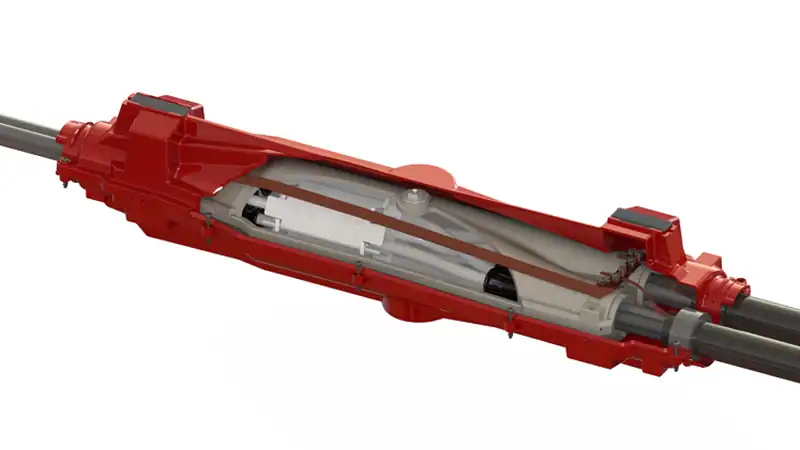
Cold shrink insulation combined with a robust housing filled with Protolin® resin. Designed for polymeric MV cable connections requiring maximum environmental protection.


FAQ
FAQ
What is a resin splice?
A resin joint is a cable splice where a two‑component resin is cast into a housing to seal and protect the connection against moisture and mechanical stress.
Are resin cable splice kits waterproof?
Water resistance depends on resin formulation, interface sealing and installation quality as part of the total splice system.
Can resin cable splice kits be used in flooded trenches?
Yes, resin splice kits are commonly specified for wet soil and flood‑prone environments when correctly selected and installed.
How do I choose the right resin cable splice kit?
Selection depends on voltage class, cable type, environment and installation constraints. Use the selection check for a fast recommendation.


