
Medium Voltage Transition Cable Joints
Medium voltage transition cable joints play a key role in ageing distribution networks where different cable generations must operate together. They are used to connect legacy and modern cable systems reliably, often as part of phased network renewal and upgrade programmes. The performance of these transition points has a direct impact on long‑term network reliability.
This page provides a practical, technically accessible guide to transition cable joints in medium voltage networks. It focuses on risk recognition, failure mechanisms and proven approaches that support long‑term grid reliability for DNOs.
→ MV transition joints that connect legacy and modern cable systems reliably
→ What is a medium voltage transition cable joint?
→ The role of transition cable joints in medium voltage networks
→ Current situation: a mixed network under pressure
→ PILC to XLPE transitions and why failures develop over time
→ Typical transition cable joint failure mechanism
→ Why installation quality is critical for transition cable joints
→ What reliable transition cable joints require and how to select them
→ Common technologies used for transition cable joints
→ Lovink transition cable joints for medium voltage networks
→ Related Solutions for transition connections
→ Improving consistency in MV transition cable joint installation
→ Improving reliability with MV transition cable joints
→ FAQ
MV transition joints that connect legacy and modern cable systems reliably
Most medium-voltage networks have been built and expanded over decades. That history is still visible underground today: different cable generations, technologies and standards coexist within a single distribution network. For Distribution Network Operators (DNOs), this is the daily reality.
Despite the widespread rollout of modern cable systems, a significant installed base of older cable types still exists across Europe. This results in aging PILC challenges. In many medium-voltage networks, paper-insulated lead-covered (PILC) cables remain in operation, often after decades of service. Research shows that these legacy assets are still commonly found in active distribution networks, highlighting the scale of ageing infrastructure that utilities must manage (MDPI study on PILC cables).
When renewal, reinforcement or expansion projects are carried out, new cable sections must be integrated into existing routes. In practice, this often means connecting older cable types—such as PILC or early-generation polymer cables—to modern XLPE systems.
As a result, distribution networks increasingly contain transition points between different cable technologies. These interfaces are not exceptions, but a structural part of today’s network landscape, reflecting both the legacy of past investments and the ongoing transition towards more modern, higher-performing cable systems.

What is a medium voltage transition cable joint?
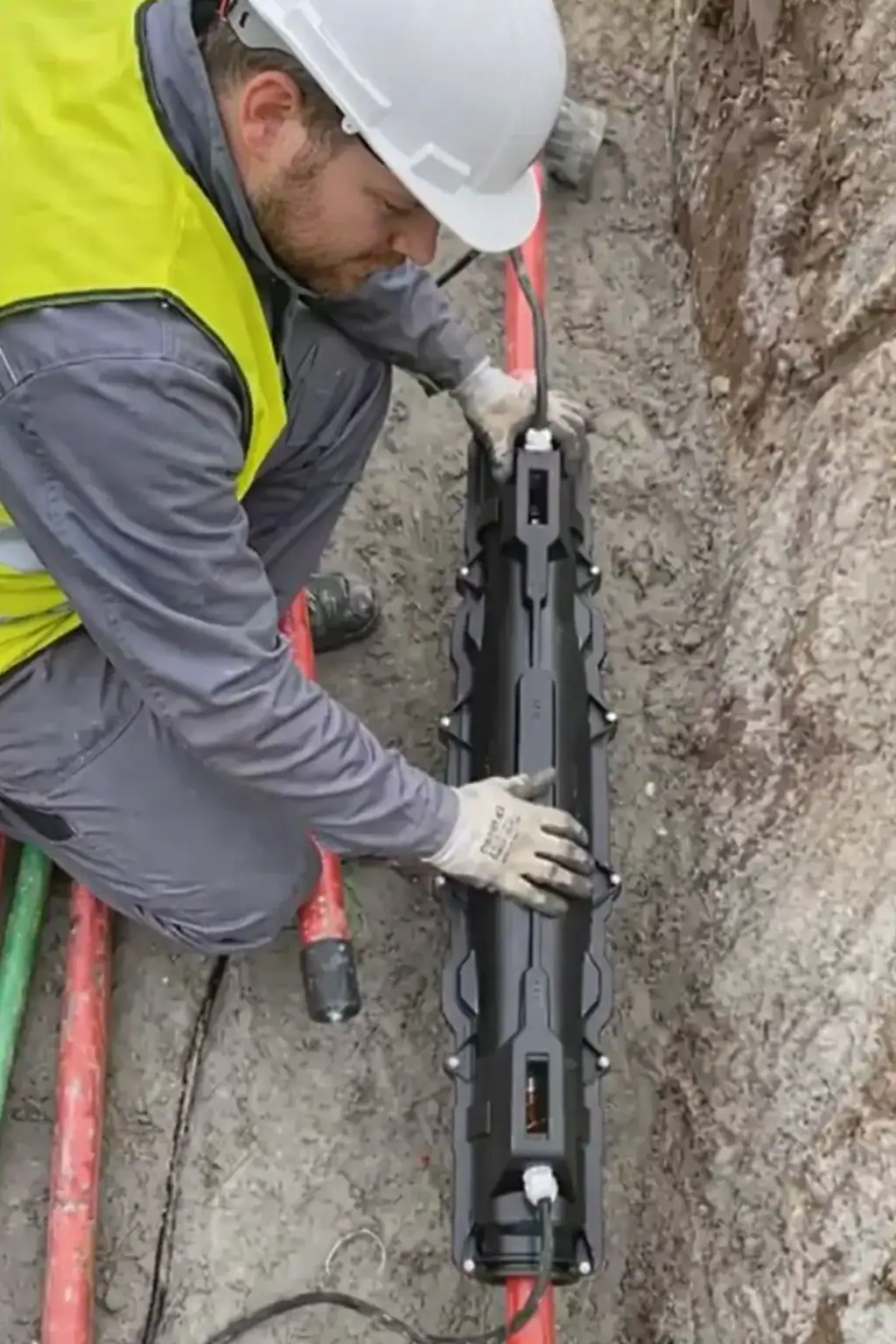
A medium voltage transition cable joint is a specialised joint used to connect different cable generations or insulation systems within one MV network. The most common application is the transition from PILC cables to XLPE cables during phased network upgrades. These joints connect insulation systems with fundamentally different electrical and ageing behaviour. If not correctly selected or installed, transition points can become a major source of failures and unplanned outages.
Transition cable joints are therefore not ordinary accessories They form critical interfaces within ageing networks and are exposed to concentrated electrical, mechanical and environmental stresses. Experience across MV networks shows that failures occur disproportionately at these transition points. When a transition fails, the consequences are immediate and costly: unplanned outages, complex fault location, repeat excavation and a measurable impact on SAIDI / SAIFI.
The role of transition cable joints in medium voltage networks
Unlike a standard straight‑through joint, a transition cable joint must accommodate fundamental differences between the connected cable systems, including:
- Different insulation materials
- Different dielectric behaviour
- Different ageing mechanisms
- Different sensitivity to moisture ingress
Typical applications of transition cable joints in MV networks
Transition cable joints are commonly applied in the following scenarios. Across all these scenarios, the same reality applies: if a transition cable joint fails, repair is rarely simple. This is why a reliability‑first approach to transition cable joints is essential for effective MV network governance.

Current situation: a mixed network under pressure
European electricity networks are currently in a transitional phase. Across many countries, distribution systems consist of a hybrid mix of ageing PILC cables and newer XLPE cable systems. While PILC was the standard for decades, XLPE has become the preferred technology for new installations and network upgrades.
At the same time, this mixed asset base introduces growing challenges. A large share of the installed infrastructure is approaching or exceeding its technical lifespan. Older PILC cables, in particular, can remain in service for 40 to 70 years or more, and are increasingly at risk of degradation and failure as they reach end-of-life (EA Technology – ageing cables).
This situation is further intensified by the energy transition. Increasing electrification and the integration of renewable energy sources place additional stress on existing networks. As a result, utilities are accelerating replacement and modernisation programmes. In this context, XLPE has become the dominant choice due to its improved performance, easier installation and long-term reliability compared to older technologies (Crown – Why utilities and industry should consider mv xlpe cables over pilc cables).
Ultimately, the coexistence of legacy PILC systems and modern XLPE infrastructure creates a growing need for reliable transition solutions. Ensuring continuity, safety, and performance in these mixed networks is becoming a key priority for utilities across Europe.

PILC to XLPE transitions and why failures develop over time
Paper‑insulated cables and XLPE cables are based on fundamentally different insulation principles. PILC cables rely on impregnated paper insulation and a metallic sheath, where long‑term performance depends on maintaining insulation condition and preventing drying out. XLPE cables use solid polymer insulation, which behaves differently under electrical stress and is more sensitive to moisture ingress.
A transition cable joint must bridge these two systems within one assembly. At this interface, differences in electrical behaviour, ageing characteristics and mechanical properties must be carefully managed. Key challenges include controlling the electric field, preventing moisture migration, ensuring stable mechanical protection and maintaining continuous earth and screen connections.
Because of these interface‑related challenges, transition cable joint failures are often delayed rather than immediate. Degradation typically develops gradually due to moisture ingress at material interfaces, slow moisture migration along insulation boundaries and local electrical stress that can lead to partial discharge activity. These processes often remain hidden for years.
As transition cable joints are usually buried and inaccessible after installation, degradation can continue unnoticed until breakdown occurs. This is why, for Distribution Network Operators (DNOs), long‑term stability must be ensured at the moment of installation. Transition points are therefore frequently the weakest link in an otherwise reliable medium‑voltage cable route.

Typical transition cable joint failure mechanism
Transition cable joint failures are rarely caused by one single mistake. They develop through a chain of mechanisms that starts at the interface and evolves over time.
Step 1 — Interface mismatch
At a transition point, different insulation systems meet within one joint. Paper‑insulated and polymer‑insulated cables have different electrical properties, ageing behaviour and mechanical stiffness.
If this interface is not optimally controlled, local electrical stress concentrations can develop. These stresses are often stable at first, but they form the starting point for long‑term degradation.
Step 2 — Moisture ingress
Small imperfections at the interface, combined with environmental exposure, can allow moisture ingress over time.
Moisture typically migrates slowly along material boundaries inside the joint. Because this process is gradual and hidden, it often remains undetected during commissioning and early operation.
Step 3 — Partial discharge and progressive ageing
When moisture and electrical stress combine, partial discharge activity can initiate at the interface. This leads to progressive insulation ageing, gradually reducing dielectric strength. Eventually, this process results in breakdown and failure, often long after the original installation.

Why installation quality is critical for transition cable joints
Transition cable joints bring multiple risk factors together at a single point in the MV network. These risks are not only related to joint design, but are strongly influenced by installation quality and site conditions. At transition points, small deviations during installation can have a disproportionate impact on long‑term reliability.

What reliable transition cable joints require and how to select them
Reliable transition cable joints must do more than provide an initial electrical connection. They must remain stable over time while connecting cable systems with different electrical, mechanical and ageing behaviour. For DNOs, reliability at transition points depends on both the intrinsic characteristics of the joint and the way the solution is selected for the specific network context.
Key reliability requirements
- Stable insulation behaviour across different cable types
- Long‑term resistance to moisture ingress
- Robust mechanical protection and continuous screen and earth bonding
- A clear, repeatable cable joint procedure that limits installation variability
Selecting transition cable joints for MV networks
“Which choice reduces the probability of failures at this transition point?”

Common technologies used for transition cable joints
Different technologies are used to realise transition cable joints in medium voltage networks. Each technology has specific characteristics that influence its suitability for connecting legacy and modern cable systems. Understanding these differences helps DNOs make informed selection decisions.

Lovink transition cable joints for medium voltage networks
Lovink’s LoviSil® medium voltage cable joints are designed as transition, straight through and branch joints, and the same technology is also applied in other MV joint types.
For transition joints, the relevant point is not the catalogue breadth, but how the design addresses the known transition risks: interface stability, sealing, moisture behaviour and installation repeatability.
Below are the key features that matter in transition contexts:
Electrical insulation: fluid silicone for stable interface behaviour
The principal dielectric is contained within an ABS inner shell and uses a high‑grade silicone‑based compound. This compound remains fluid, which helps minimise the risk of discharge mechanisms that can be associated with dried‑out paper insulation.
A relevant design element for transitions is the equivalent εr value: the dielectric constant of liquid silicone is practically identical to the insulation of polymeric cables (XLPE/EPR) and remains so even when cured. This supports a consistently homogeneous electric field — a practical benefit at mixed‑material interfaces.
Mechanical protection: robust housing with long‑term moisture resistance
Mechanical protection is provided by a strong ABS outer shell, filled with two‑component polyurethane resin. This resin provides long‑term moisture resistance, and a copper wire mesh serves as the electrical screen.
Earth and screen protection: encapsulation that supports corrosion resistance
The polyurethane resin provides environmental protection for the main earth bond and screen components. With its “searching” characteristics, it encapsulates every item, supporting corrosion resistance and durability of the bonding system.
Sealing: bonded shell + secondary protection mechanism
The bonding of polyurethane resin to ABS provides a guaranteed seal to the outer shell. If moisture would penetrate to the inner joint, a soft, water‑resistant and insulating rubber is formed around the cores when cured, providing an additional protective layer against the effects of moisture ingress.
Installation: intuitive, controlled and a clear step sequence
Installation is described as easy, intuitive and fast, with an installation process accomplished in 7 steps (cable preparation through outer joint filling).
- Installation requires only standard installation tools and does not involve the use of a burner or open heat source.
- The joint is supplied with pre‑assembled and pre‑positioned components wherever possible.
- During filling, levels can be controlled effectively: the transparent inner joint and grey outer joint include level indicators, and the LoviSil® bag has handles and a filling spout.
This supports repeatability and reduces installation variance — a key contributor to long‑term joint performance.
Proven technology and testing relevant to underground conditions
LoviSil® MV joints have almost 40 years of proven field experience with an extremely low failure rate. They have been tested according to
- HD 628 / EN IEC 61442 and HD 629, executed under water pressure of 2 bar, which is relevant for applications in waterlogged soils and high water tables.
- IEEE 404

Related Solutions for transition connections


Trusted by DNOs for Long-Term Network Renewal Programmes
For many Distribution Network Operators (DNOs), transition joints are not occasional components but a recurring part of long-term network renewal programmes.
Lovink supplies annual transition joint requirements to multiple DNOs across Europe, supporting the gradual replacement and modernization of ageing cable networks.
Several of these partnerships have been in place for decades. This long-term collaboration reflects the importance of reliability, consistency and lifecycle performance when managing transition points between legacy and modern cable systems.

Improving consistency in MV transition cable joint installation
Even the most advanced transition cable joint solutions depend on correct application to deliver reliable long‑term performance. In MV networks with mixed cable generations, installation conditions are often demanding and access after commissioning is limited, making training and technical support essential.
Lovink supports DNOs with structured training, clear installation guidance and practical on‑site support, helping to reduce installation risks and improve consistency across crews. Early validation of procedures under real network conditions further reduces commissioning risk and supports predictable long‑term reliability at transition points.
By integrating training and project‑specific validation early in execution, installation procedures can be verified under real network conditions.

Improving reliability with MV transition cable joints
Transition cable joints are a practical necessity in ageing medium voltage networks. As legacy cable systems are gradually connected to modern XLPE cables, transition points become an integral part of network modernisation. At these interfaces, long‑term reliability is often decided.

FAQ
Below you will find answers to frequently asked questions about transition cable joints in medium voltage networks. These questions reflect common concerns related to reliability, failure mechanisms and practical application in existing MV infrastructure.
1. What is a PILC to XLPE transition cable joint?
A PILC to XLPE transition cable joint is a medium voltage joint used to connect paper‑insulated lead‑covered (PILC) cables to modern XLPE cables within the same network. It is typically applied during phased cable replacement or network upgrades. The joint must bridge insulation systems with very different electrical and ageing behaviour, which makes correct selection and installation critical.
2. Why do transition cable joints fail?
Transition cable joints usually fail due to interface‑related issues rather than conductor problems. Common causes include moisture ingress, insufficient stress control and installation errors at the transition between different cable types. These effects often develop over time, which is why failures can occur years after installation.
3. How long do medium voltage transition cable joints last?
The service life of a medium voltage transition cable joint depends on joint design, installation quality and environmental conditions. When correctly selected and installed, transition cable joints are expected to perform reliably for several decades, often matching the remaining life of the connected cables. Installation quality and long‑term sealing are decisive factors.
4. What is the difference between straight through joints and transition cable joints?
A straight‑through joint connects similar cable types, with the same insulation system and construction. A transition cable joint connects different cable generations or insulation systems, such as PILC and XLPE. Transition joints are more complex because they must manage differences in electrical behaviour, ageing and moisture sensitivity within one joint.
5. Are transition cable joints the weakest point in medium voltage networks?
In ageing MV networks, transition cable joints are often among the most critical points, because they combine different materials and ageing mechanisms. While cables themselves can have long service lives, failures frequently originate at transition interfaces. This makes transition joints a key focus area for improving long‑term network reliability.
These FAQs cover the most common questions about transition cable joints. For additional insights and technical guidance, explore our complete FAQ library.


