
Cable Joints for Renewable Energy Projects
Renewable energy projects rely on fast and reliable grid connections to meet commissioning deadlines and long term performance requirements.
Within these connections cable joints are critical components that must operate reliably under variable loads thermal cycling and challenging installation conditions.
This page provides an overview of cable joints in renewable energy projects including grid connection challenges typical applications jointing solutions and practical project examples.
→ Reliable cable jointing for wind, solar, BESS and grid connections
→ What are cable joints in renewable energy systems?
→ Why cable joints are critical for renewable energy projects
→ The current situation in renewable energy grid connections
→ Key challenges and problems for cable joints in renewable energy projects
→ Typical cable joint applications in renewable energy projects
→ Cable jointing solutions for renewable energy applications
→ Proven cable jointing solutions in renewable energy projects
→ From standards to real world performance in renewable energy jointing
→ Common mistakes and risks when applying cable joints in renewable energy projects
→ Lovink cable jointing solutions for renewable energy grids
→ Training and support for reliable cable jointing in renewable energy projects
→ Take the next step towards reliable renewable energy grid connections
Reliable cable jointing for wind, solar, BESS and grid connections
Renewable energy projects such as wind farms, solar parks and battery energy storage systems are developed under increasing pressure to connect faster, scale up capacity and meet fixed commissioning deadlines.
As renewable generation continues to grow, as described by the International Energy Agency, power grids are exposed to higher electrical loads, more frequent thermal cycling and increasingly tight installation schedules.
At the same time, many grid connections are installed underground or in locations with limited access after commissioning. In this context, incorrect selection or application of cable joints directly increases project risk, leading to failures, downtime and costly corrective work.

What are cable joints in renewable energy systems?
Cable joints are connection points used to join two or more electrical cables, ensuring continuous power transmission within a grid. In renewable energy systems, cable joints are applied across medium‑ and high‑voltage networks to connect generation assets such as wind turbines, solar arrays and battery energy storage systems to substations and distribution grids.
In renewable energy projects, cable joints must do more than provide electrical continuity. They operate in grids characterized by variable power generation, frequent load changes and demanding environmental conditions. As renewable generation becomes more decentralized, the number of grid connections and cable joints increases, making their reliability critical for overall system performance and commissioning success.
Typical renewable energy applications include underground cable routes, export and inter‑array connections, grid reinforcement projects and temporary or fast‑track grid connections. In all these scenarios, the cable joint represents a critical distribution point.
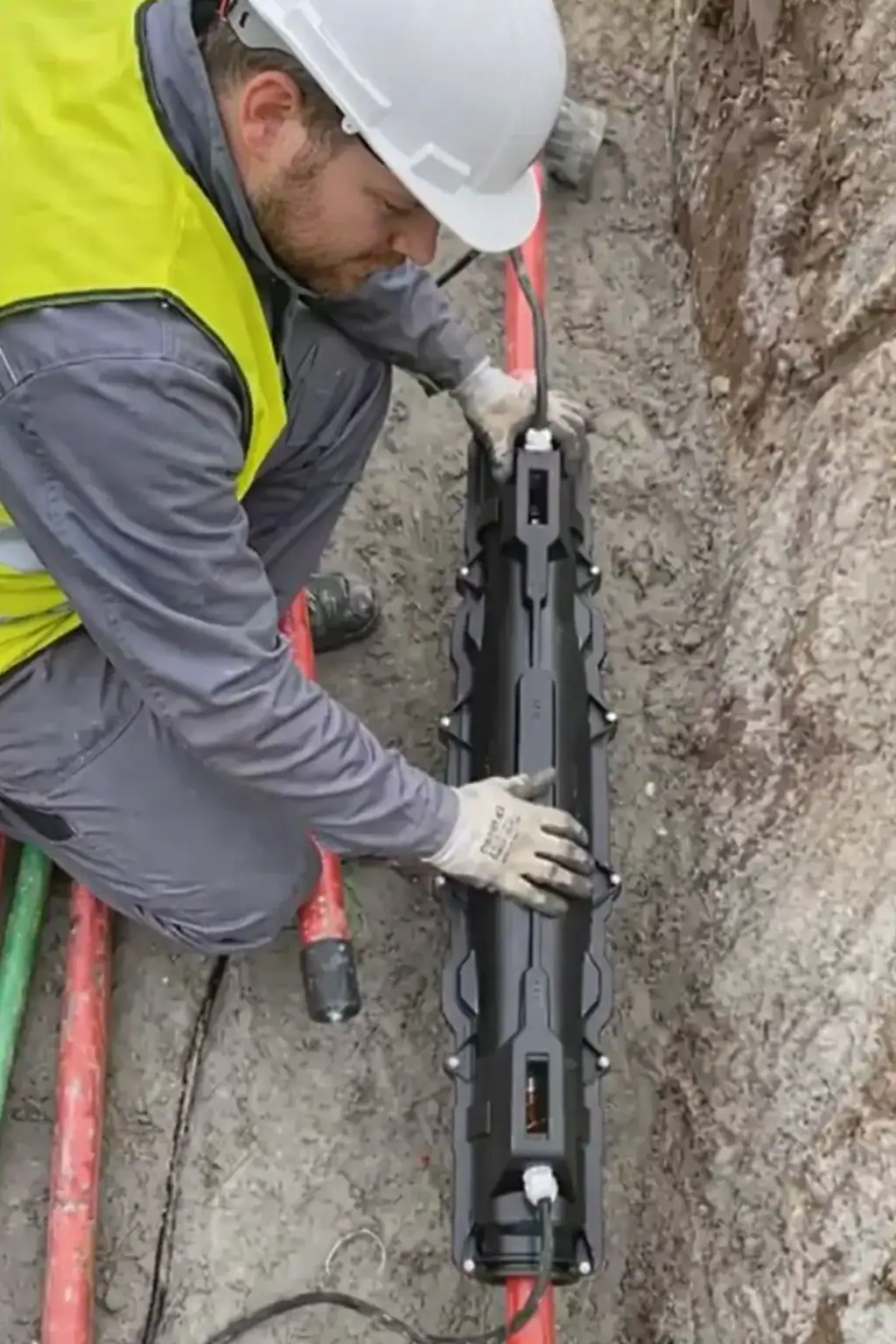
Learn more about underground cable joints and how they support reliable grid connections in renewable energy projects.
Why cable joints are critical for renewable energy projects
In renewable energy systems, cable joints are among the most critical components of the power network. While power cables are designed for long service lifetimes, cable joints form the transition points where electrical, mechanical and environmental stresses converge.
Renewable energy projects introduce specific conditions that increase the importance of these connection points. Power generation is inherently variable, leading to frequent load changes and thermal cycling. At the same time, many grid connections are installed underground, making correct selection and installation essential from the outset.
A failure at a cable joint can interrupt power transmission, delay grid connection approval and result in significant downtime. In large renewable projects such as wind farms or utility‑scale solar parks, a single joint failure may affect multiple assets, directly impacting project availability, contractual obligations and revenue.
For this reason, cable joints in renewable energy applications must be treated as risk‑critical system elements. Selection, installation and validation require a strong focus on reliability, long‑term performance and compliance with applicable standards, not only at component level, but at project and grid‑connection level.

Discover cable jointing solutions designed for renewable energy application.
The current situation in renewable energy grid connections
Renewable energy capacity is expanding rapidly, placing increasing pressure on existing power grids. Wind farms, solar parks and battery energy storage systems are being connected at a high pace, often in locations where grid infrastructure was not originally designed for decentralized and intermittent generation.
As a result, grid connections are exposed to higher electrical loads, more frequent switching operations and greater thermal variation. At the same time, project timelines are becoming shorter, while the availability of skilled installation capacity remains under pressure.
Within this context, cable joints become a critical factor in grid connection reliability. They are installed under time constraints, expected to perform reliably over long asset lifetimes and are often difficult or impossible to access once commissioned. This makes the correct selection, installation and validation of cable joints essential for the stable operation and availability of renewable energy grids.
Explore the main challenges cable joints face in renewable energy projects further on this page

Key challenges and problems for cable joints in renewable energy projects
Cable joints used in renewable energy projects are exposed to a combination of technical, operational and environmental challenges. Unlike traditional grid installations, renewable energy systems are characterized by variable power generation, frequent load changes and accelerated project timelines, which place additional stress on grid connections.
Incorrect joint selection, improper installation or insufficient validation can lead to joint failures, reduced system availability and delays in grid connection approval. These risks increase further in projects involving multiple contractors, mixed cable types or fast‑track installation schedules, where consistency and control are harder to maintain.
Understanding these challenges is essential when selecting cable jointing solutions for renewable energy grids, as early decisions directly influence commissioning risk, long‑term reliability and total cost of ownership.
For specific technical scenarios explore our Renewable Energy Cable Jointing Solutions

Typical cable joint applications in renewable energy projects
Cable joints are used throughout renewable energy projects to connect generation assets to the power grid. Depending on the type of renewable installation and the grid configuration, cable jointing solutions must accommodate different cable types, medium‑voltage levels, installation environments and operational demands.
In renewable energy systems, cable joints are frequently installed underground or in locations with limited accessibility. Once commissioned, these joints are expected to operate reliably for long periods without maintenance or intervention. This makes the application context a decisive factor in both joint selection and installation strategy.
Understanding typical renewable energy jointing scenarios helps project teams reduce installation and commissioning risk, limit future downtime and ensure stable, long‑term grid performance.

Cable jointing solutions for renewable energy applications
Different renewable energy projects require different cable jointing solutions. The selection of a suitable cable joint depends on electrical load, voltage level, installation environment, cable construction and long‑term performance requirements within the grid connection.
In renewable energy grids, cable joints must deliver reliable insulation, mechanical strength and effective environmental sealing over long service lifetimes. Jointing technologies are therefore not selected solely based on installation convenience, but on proven performance under variable electrical loads, thermal cycling and challenging site conditions.
Understanding the available cable jointing solutions and their typical use cases enables engineers, project managers and procurement teams to make informed decisions that reduce commissioning risk, improve consistency during installation and support long‑term grid reliability.

Proven cable jointing solutions in renewable energy projects
In renewable energy projects, theoretical performance alone is not sufficient. Cable jointing solutions must prove their reliability in real‑world conditions, where variable loads and environmental exposure are common.
Across wind, solar and grid reinforcement projects, cable joints are expected to perform consistently. Proven solutions are characterized by stable electrical performance, predictable installation quality and compliance with applicable standards.
Case studies provide insight into how cable jointing solutions are applied in practice, which challenges are encountered and how risks are mitigated in renewable energy grids.
Common joint configurations proven in renewable energy projects

Looking for more information on branch joints, cross-bonding applications and real-world renewable energy projects? Explore the brochures and project references below.
From standards to real world performance in renewable energy jointing
Cable joints for renewable energy projects are designed and tested according to international standards. These standards define minimum requirements for electrical performance, insulation integrity and operational safety. However, compliance with standards alone does not guarantee reliable long‑term performance in real‑world renewable energy applications.
In practice, cable joints are exposed to conditions that extend far beyond laboratory test scenarios. Renewable energy grids introduce variable electrical loads, frequent thermal cycling, environmental influences and installation‑related variability. Under these conditions, the gap between theoretical compliance and practical performance becomes critical.
Bridging this gap requires more than certified cable jointing systems alone. Reliable real‑world performance is achieved when correct application selection, controlled installation processes and trained personnel are aligned with product design and applicable standards. In renewable energy projects, this alignment is essential to ensure long‑term grid reliability, asset availability and predictable project outcomes.

Interested in how cable jointing systems are tested for real-world conditions? Read our blog on testing standards and performance validation.
Common mistakes and risks when applying cable joints in renewable energy projects
Despite the availability of certified cable jointing solutions, failures in renewable energy projects are often caused by avoidable mistakes. These mistakes typically occur during joint selection, installation or validation and are amplified by time pressure, complex project environments and the involvement of multiple contractors.
In renewable energy grids, cable joints are frequently installed underground or in locations that are difficult or impossible to access after commissioning. As a result, installation errors may remain unnoticed until a failure occurs, at which point repair costs, downtime and project impact are significantly higher.
By recognizing the most common mistakes and associated risks early, project teams can reduce failure probability, limit commissioning delays and improve long‑term grid reliability across renewable energy assets.

Lovink cable jointing solutions for renewable energy grids
Lovink supports onshore renewable energy projects with cable jointing solutions designed for reliable grid connections and predictable long‑term performance. Our solutions are applied in wind, solar, battery energy storage and grid reinforcement projects where joint reliability directly impacts commissioning, availability and asset lifetime.
Rather than offering one‑size‑fits‑all products, Lovink focuses on application‑driven cable jointing systems. Solutions are selected and configured to match the electrical load profile, installation environment and lifecycle requirements of renewable energy grids. This approach helps project teams reduce installation risk, improve consistency across contractors and achieve predictable project outcomes.
Lovink cable jointing solutions are supported by technical expertise, documentation and training. This enables engineers, installers and project managers to apply cable joints correctly and consistently across different renewable energy applications, even under time pressure and challenging site conditions.

Training and support for reliable cable jointing in renewable energy projects
Even the most advanced cable jointing solutions require correct application to achieve reliable long‑term performance. In renewable energy projects, where installation conditions are demanding and access after commissioning is limited, training and technical support are critical success factors rather than optional extras.
Lovink supports project teams with structured training programs, installation guidance and practical on‑site support. This approach helps reduce installation risks, improve consistency across contractors and ensure that cable joints are applied correctly, documented properly and aligned with project and grid requirements.
In many renewable energy projects, training and project‑specific trials are integrated early in the execution phase. This allows jointing solutions and installation procedures to be validated under real project conditions before large‑scale deployment, reducing commissioning risk and long‑term failure probability.
Lovink support options

Take the next step towards reliable renewable energy grid connections
Reliable cable jointing in renewable energy projects requires more than selecting the right products alone. It depends on correct application, validated performance, trained installation and practical support throughout the entire project lifecycle.
Whether you are in the early design phase, preparing for installation or optimizing existing grid connections, a structured approach to cable jointing helps reduce technical risk, avoid commissioning delays and improve long‑term system reliability. By combining proven jointing solutions with training, trials and technical support, renewable energy projects can achieve predictable and sustainable grid performance.
Lovink supports project owners, utilities and contractors throughout this process — from technical advice and solution validation to training and on‑site support during installation and commissioning.

Can’t find the information you’re looking for? Visit our FAQ page or contact our specialists.


