Reliable, efficient and scalable cable jointing for wind, solar and grid integration projects
Renewable energy projects are growing fast, but connecting and upgrading medium-voltage cable networks is becoming more complex. Wind farms and solar parks place higher demands on the grid, not only during the initial connection, but also in later stages such as expansion, repowering and long-term operation.
Challenges such as dependency on switchgear, increasing cable capacities, energy losses in cable systems and complex grid layouts can impact project timelines, efficiency and reliability.
At the same time, network operators and contractors need practical solutions to connect, upgrade and optimise cable systems in a reliable and efficient way.
This page explores the key challenges in renewable energy cable networks and how different cable jointing approaches can support:
- Faster connection of wind and solar farms
- Efficient upgrades of existing wind farm infrastructure
- Reduction of energy losses in cable systems
- Optimisation of cable layouts and installation effort
For a broader overview check out our page on Cable Joints for Renewables Energy Projects.
Fast Renewable Grid Integration
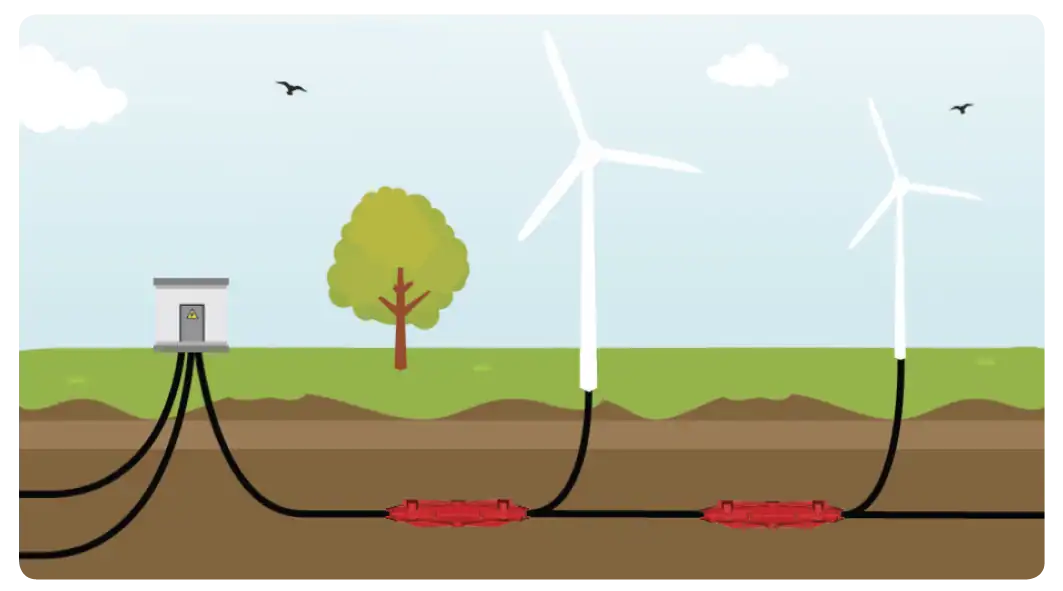
Connecting wind and solar farms to the medium-voltage grid is often dependent on switchgear at every turbine. While essential for protection and operation, switchgear can become a major bottleneck in renewable energy projects.
Long delivery times, complex logistics and global supply constraints regularly lead to project delays. In addition, failures cannot be repaired quickly, as damaged units often require full replacement, resulting in extended downtime. In ring networks, a single failure can even impact multiple turbines, increasing operational and financial risks.
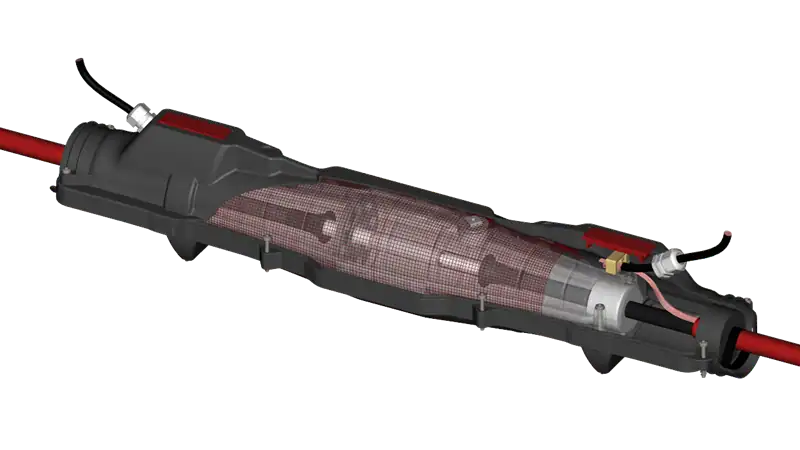
Fast Renewable Grid Integration offers an alternative approach. By using LoviSil® feed-in joints, wind and solar assets can be connected directly to the underground MV collection grid without relying on switchgear. This enables faster commissioning and allows energy to be fed into the grid at an earlier stage.
Based on LoviSil® technology, these cable jointing solutions provide reliable performance under demanding conditions and variable loads.
- Direct MV grid connection without switchgear
- Faster commissioning of wind and solar projects
- Reduced project delays and downtime risks
- Suitable for both temporary and permanent connections
- Resistant to variable loads and harmonic conditions
- Waterproof, robust and less dependent on workmanship
Want to know more about reliable cable connections?
Would you like to discover how LoviSil® Feed-in joints protects your medium-voltage network against failures and saves costs? Feel free to contact our specialists for advice.
Repowering Windmill Upgrade
Repowering wind farms involves upgrading existing turbines to larger and more powerful models. While this increases energy output, it also places higher demands on the medium-voltage cable network.
Larger turbines require higher capacities and often result in bigger cable cross-sections within the wind farm. In existing layouts, this can lead to complex cable routing, additional joints and increased installation effort, especially in ring configurations where reliability is critical.
Repowering Windmill Upgrade focuses on enabling these upgrades in a practical and efficient way. By using LoviSil® feed-in joints, larger cables can be connected directly within the existing grid layout. This makes it possible to connect cable cross-sections from 95 mm² up to 1000 mm² in one joint, without the need for unnecessary additional connections.
This approach reduces installation complexity and makes it easier to integrate larger turbines into existing wind farm infrastructure.
- Enables connection of larger cable cross-sections (95–1000 mm²) in one joint
- Supports integration of higher-capacity wind turbines
- Reduces the number of joints and excavation work
- Simplifies installation in ring and branched grid configurations
- Efficient and reliable connection using LoviSil® feed-in technology
With LoviSil® feed-in joints, repowering projects can be executed with less disruption, while maintaining a reliable and future-proof MV grid.
Cross-bonding for MV Cable Grids
In wind farms with long medium-voltage cable routes, sheath currents can occur in the metallic screens of single-core cables. These currents do not contribute to power transmission, but they can lead to high energy losses and potential overheating in the cable system.
This becomes especially relevant in renewable energy projects where the cable network is exposed to high and variable loads over a long period of time. If sheath currents are not controlled, they can reduce the efficiency of the grid and increase thermal stress on the cables.
Cross-bonding for MV Cable Grids offers a technical solution to reduce these effects. By using LoviSil® cross-bonding joints, the metallic screens of the single-core cables are connected crosswise. This helps to balance induced voltages and reduce circulating currents in the cable screen. As a result, energy losses are limited and the cable network can operate more efficiently.
This solution is particularly valuable for wind farms, where reducing losses over the full operating life of the project can have a direct financial impact.
- Reduces sheath currents in medium-voltage cable grids
- Helps prevent high energy losses and potential overheating
- Supports efficient operation of long cable routes in wind farms
- Improves reliability of single-core MV cable systems
- Helps reduce losses during the full lifetime of the wind farm
- Technical solution using LoviSil® cross-bonding joints
By reducing sheath currents and limiting energy losses, LoviSil® cross-bonding joints help wind farms maintain a more efficient and reliable MV cable network throughout the full project lifetime.
Would you like to discover how LoviSil® cross-bonding joints help reduce losses and improve the performance of your medium-voltage cable network? Feel free to contact our specialists for advice.
Connecting Different Cable Types en Diameters
In medium-voltage cable networks, different cable cross-sections and types are often combined within one route. This can lead to complex layouts, multiple joints and increased excavation work.
Connecting large differences in cable cross-sections in one connection is therefore a key challenge, especially in renewable energy projects and grid upgrades.
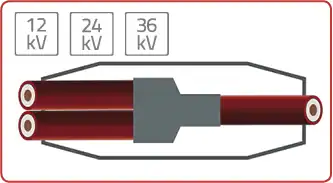
Using LoviSil® and LoviX® cable jointing solutions, different cable sizes can be combined in a single joint. This makes it possible to connect:
- 95–630 mm² conductor cross-sections in one joint
- 185–400 mm² conductor cross-sections in one joint
- 630–1200 mm² conductor cross-sections in one joint
By reducing the need for multiple transition joints, the cable layout becomes much simpler and more efficient.
- Connects different cable cross-sections in one joint
- Strong labour saving during installation
- Less digging and material saving
- Fewer joints required in the cable network
- Suitable for mixed cable types (PILC and XLPE/EPR)
By reducing the number of joints and simplifying installation, cable networks can be realised with less effort, lower material use and a more efficient installation process.
Would you like to discover how LoviSil® and LoviX® cable jointing solutions enable the connection of different cable cross-sections in one joint while reducing installation effort and excavation work? Feel free to contact our specialists for advice.