Reduce MV cable length and installation effort
Simplify your solar, wind or BESS collector system without compromising control or reliability.
Designing MV collector systems for solar, wind and BESS projects often comes down to balancing efficiency, cost and installation effort. Conventional approaches, such as loop-in/loop-out configurations, are widely used and technically proven, but they can also introduce unnecessary cable routing, additional components and more demanding installation processes.
There is an alternative way to approach collector system design that reduces cost and installation effort while maintaining full control and reliability. Further down this page, you can access the full engineering guide, where this approach is explained in more detail within practical renewable energy projects.
Why reconsider your collector system design?
Traditional MV collector system designs often rely on loop-in/loop-out configurations or multiple switchgear points throughout the network. While technically effective, these setups can introduce additional cable routing, more components and increased installation effort.
As project size increases, these inefficiencies start to add up. What works at smaller scale can lead to higher costs, longer installation time and more effort in execution in larger solar, wind or BESS projects.
Typical impact for large-scale projects
• Reduced MV cable length
• Fewer switchgear and terminations
• Lower installation effort
The Lovink Solution
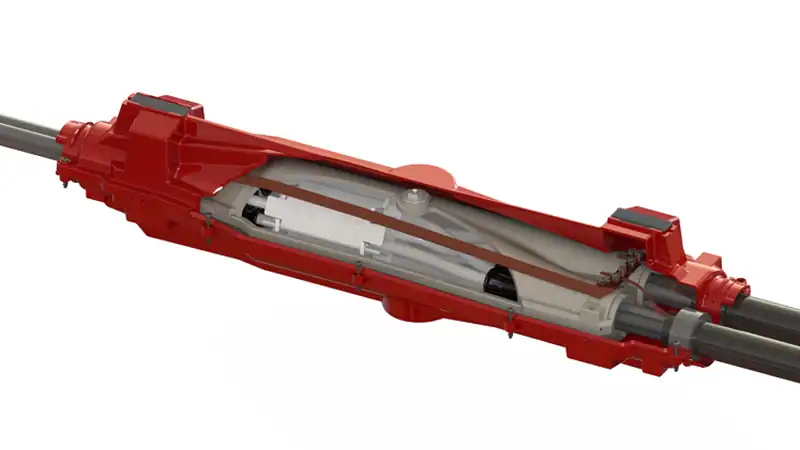
Lovink’s branch joint technology enables a different approach to MV collector system design by allowing a continuous feeder with direct connections to each asset. Instead of routing cables through every station, the system becomes more direct and structured.
This results in a reduction of cable routing, fewer required components and a more efficient overall system layout, particularly in larger renewable energy projects. Protection and switching functionality remain unchanged, while the collector system layout itself becomes simpler and more direct.
What changes with a different design approach?
Less cable required
A more direct collector system layout reduces the need for looping cables between assets. By simplifying the routing, total cable length across the system can be reduced, particularly in larger projects where distances and scale play a significant role.
Fewer components in the system
Reducing the number of required connections also means fewer components such as switchgear and cable terminations. This results in a more streamlined design with fewer interfaces and a lower level of lower overall system cost and number of components.
Simpler and more efficient installation
With a more straightforward layout and fewer components to install, execution on site becomes more straightforward. This can simplify planning and reduce the overall effort required during installation, especially in time-sensitive renewable energy projects.
Where it can be applied
Solar parks
Optimise string layouts and reduce cable distances between inverter stations.
Wind farms
Reduce long inter-turbine cable runs and improve overall system efficiency.
BESS installations
Enable scalable expansion without reconfiguring the main feeder.
Download the full engineering guide
Download the full engineering guide
Want to explore what this means in practice?
Fill in your details below to access the full engineering guide and see how this approach can be applied in your project.